
Lake Boone Dentistry | Raleigh, NC
The History of Lake Boone
Most people who drive down Lake Boone Trail never stop to wonder where the name came from. There's no lake visible from the road. No shoreline, no dock, no water. Just a busy Raleigh corridor lined with medical offices, restaurants, and neighborhoods. But underneath those neighborhoods — quite literally — lies the history of a real lake that once defined this part of west Raleigh. At Lake Boone Dentistry, we've been practicing at 2310 Myron Drive since 1971, and the story of the lake our practice is named for is one we think every Raleigh neighbor deserves to know.
What Was Lake Boone?
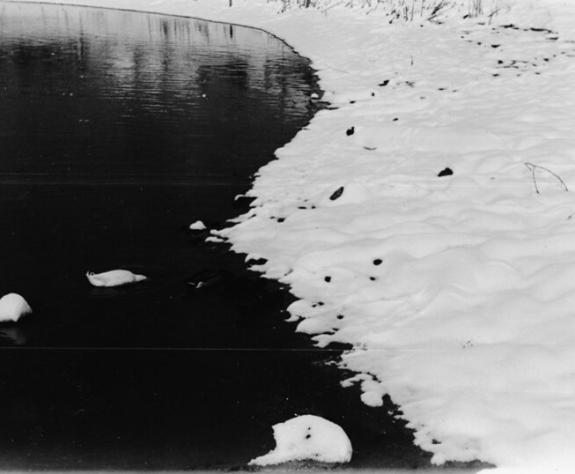
Lake Boone — known locally for generations as Boone's Pond — was a natural body of water located at the corner of Lake Boone Trail and Cambridge Road in what is now the Budleigh neighborhood of west Raleigh. It was one of at least two ponds that sat on a sprawling historic farm called Cloverdale, owned by Dr. Richard Battle Lewis, one of Raleigh's most prominent citizens of the 19th century.
Lewis was a physician, civic leader, and longtime senior warden of Christ Church in Raleigh. His farm, Cloverdale, covered a vast swath of what is now the Budleigh, Oberlin, and surrounding neighborhoods. The farm's stone quarry — located beneath what is now the Harris Teeter at Glenwood and Oberlin — provided the distinctive light-colored stone used in some of Raleigh's most iconic buildings, including Broughton High School's famous tower just down the road from our office.
Boone's Pond sat quietly at the edge of this farmland for decades, a fixture of the natural landscape in west Raleigh long before the surrounding neighborhood took shape.
Boone's Pond in Its Heyday

By the early 20th century, Boone's Pond had become a beloved part of the neighborhood's identity. A 1939 photograph preserved in the State Archives of North Carolina captures a winter scene at the pond — families sledding on its banks, houses bordering the water, the kind of image that speaks to how central the pond was to community life in that era.
By 1945, residents along Lake Boone Trail still referred to it fondly as Boone's Pond. One Raleigh family recalled their grandparents' old stone house at the end of Lake Boone Trail, and memories of skating and playing on the frozen pond in winter were passed down through generations. It was a gathering place, a landmark, and a source of neighborhood identity long before the surrounding streets were named after it.
The pond also carries a piece of deeper Raleigh history. Records from the 1890s describe how members of the historically Black Wilson Temple United Methodist Church — located nearby at Oberlin and Wade — once held baptisms in what was then known as "Dr. Lewis' pond." It is one of the earliest recorded religious gatherings connected to this part of Raleigh.
The Dam, the Breach, and the End of Lake Boone

As Raleigh grew westward through the mid-20th century, the area around Boone's Pond was gradually developed. By the early 1950s, Dixie Trail had extended to Lake Boone Trail, and much of the surrounding Budleigh neighborhood was incorporated into Raleigh by 1951. Modest ranch-style homes began filling in the cleared fields on either side of Lake Boone Trail throughout the 1950s.
The lake itself, however, persisted — until 1972.
That year, the dam that held Boone's Pond in place was breached. The water drained away, leaving behind a cattail marsh that persisted for over a decade. Eventually, the old lakebed was filled with excavation debris and soil, and Beaverdam Creek — which had fed the pond — was confined to a straight channel running beneath what would become a new residential neighborhood.
The area was then prepared for development. The first houses were built on the old lakebed, and over the following years the Lake Boone Place residential neighborhood took shape on the exact ground where Raleigh families had once skated, sledded, and gathered at the water's edge.
Heavy rains in 1988 and 1996 flooded parts of the area — a reminder that the creek still runs beneath it all — reinforcing why the remaining homes were built on higher ground.
What Remains Today

The lake is gone, but its name lives everywhere. Lake Boone Trail — one of the busiest roads in west Raleigh — carries the name of a pond that hasn't existed for over 50 years. The Lake Boone Place neighborhood sits directly on the old lakebed. Rex Hospital, one of Raleigh's largest medical centers, is addressed at 4420 Lake Boone Trail. And our own practice — Lake Boone Dentistry — has carried the name since we opened our doors in 1971, the very same year the neighborhood around us was at its most complete and just one year before the dam would breach and the lake would disappear for good.
In a way, our name is one of the last living connections to what this part of Raleigh once looked like — a quieter, more open landscape where a pond at a country road intersection gave a neighborhood its identity
A Neighborhood Rooted in Raleigh History

The story of Lake Boone is really the story of Raleigh itself — a city that has grown rapidly, layer by layer, over a landscape rich with history that is easy to drive past without ever noticing. The Cloverdale farm that once stretched across this part of west Raleigh is now a patchwork of neighborhoods, shopping centers, medical campuses, and streets whose names — Fairview Road, Lake Boone Trail, Budleigh — quietly preserve echoes of what came before.
At Lake Boone Dentistry, we've been part of this neighborhood since 1971. We've watched Raleigh grow and change around us, and we remain proud to carry the name of the lake that shaped this corner of the city — even if the lake itself is long gone.
If you're a Raleigh neighbor who loves local history, we'd love to have you as a patient. Call us at (919) 781-8610 or stop by 2310 Myron Drive, Suite 100.